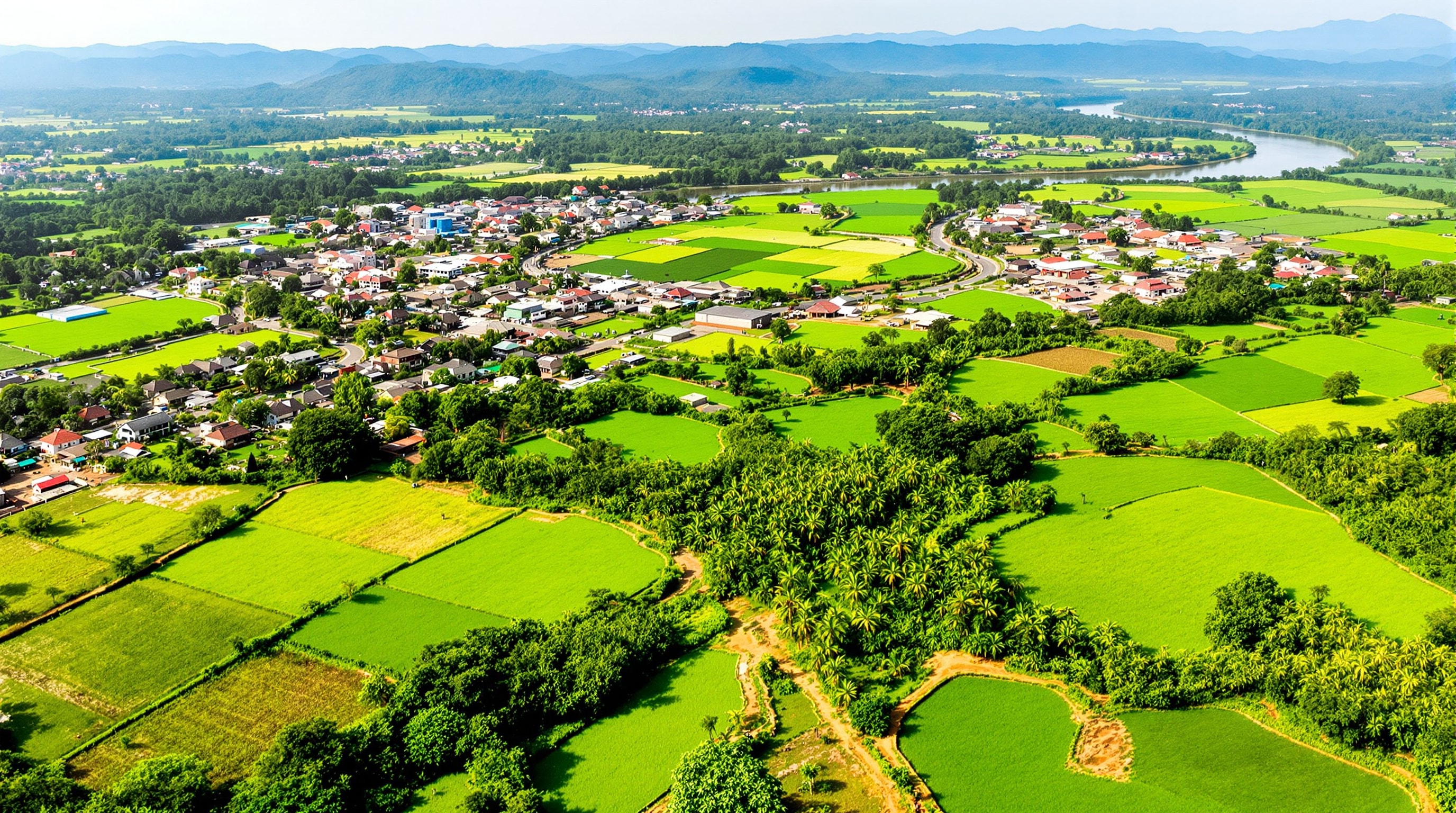
Eruvadi is a beautiful and peaceful town in the Tirunelveli district of Tamil Nadu, in the far south of India. It is surrounded by low hills, paddy fields and banana groves, and the Nambi river runs through its middle, dividing the town into a northern and a southern half. It is the kind of place you can walk across in an unhurried afternoon, yet its layout, its mix of communities and its links to the wider world reward a closer look.
Where Eruvadi Is
The town sits in the southern part of Tirunelveli district, between the town of Nanguneri to the north and Vallioor to the south, not far from the point where the plains give way to the Western Ghats. Tirunelveli city, the district headquarters, lies to the north-east, and the coast at the Gulf of Mannar is within reach to the east. Its position - lowland farming country at the foot of the mountains - explains much about both its landscape and its economy.
A Town Planned Around a River
The single most distinctive thing about Eruvadi is how deliberately it is arranged around water. The older streets were laid out so that each of them runs down to and ends at the bank of the Nambi river. This is not accidental; it reflects a long-ago decision to plan the growing settlement systematically, so that the river remained the shared spine of the town. Even today the pattern is easy to read on a map, and it gives Eruvadi a coherence that many organically grown villages lack. You can read more about the waterway itself on the Nambi river page.
People and Communities
According to the 2011 Census of India, Eruvadi had a population of a little over 18,000, governed as a town panchayat. The community is predominantly Muslim - close to three-fifths of residents - with substantial Hindu and Christian populations making up most of the remainder. This mix is old and settled rather than recent, and the town is frequently pointed to as an example of everyday communal coexistence in the region. The community and culture page looks at the associations, mosques, temples and shared calendar that hold that fabric together.
How People Make a Living
Historically, Eruvadi has been an agricultural town, its economy resting on the paddy and banana grown in the fields that ring it, watered by the Nambi and by seasonal rains. Over the last several decades, however, a second economy has grown alongside the first: remittances sent home by residents working in the Gulf states. The result is a town whose prosperity is unusually visible - in its houses, its schools and its civic institutions - for a settlement of its size. Both stories are told in the agriculture and livelihood and Gulf connection sections.
The Town Today
Modern Eruvadi is a quiet market and residential town rather than a tourist destination, and that is part of its appeal. It offers a genuine, un-staged picture of small-town life in southern Tamil Nadu: schools letting out in the afternoon, shops along the main road, farmers moving between the fields and the river, and the sounds of three faiths' worship carrying across the same compact grid of streets. For visitors, its real value is as a window onto the wider Nellai region and as a gateway to the mountains and waterfalls just to the west.
A Note on Sources
The geographic and demographic details on this page draw on the public encyclopaedic record and the Census of India. For the administrative picture of the wider district, the Tirunelveli district administration maintains an official portal.