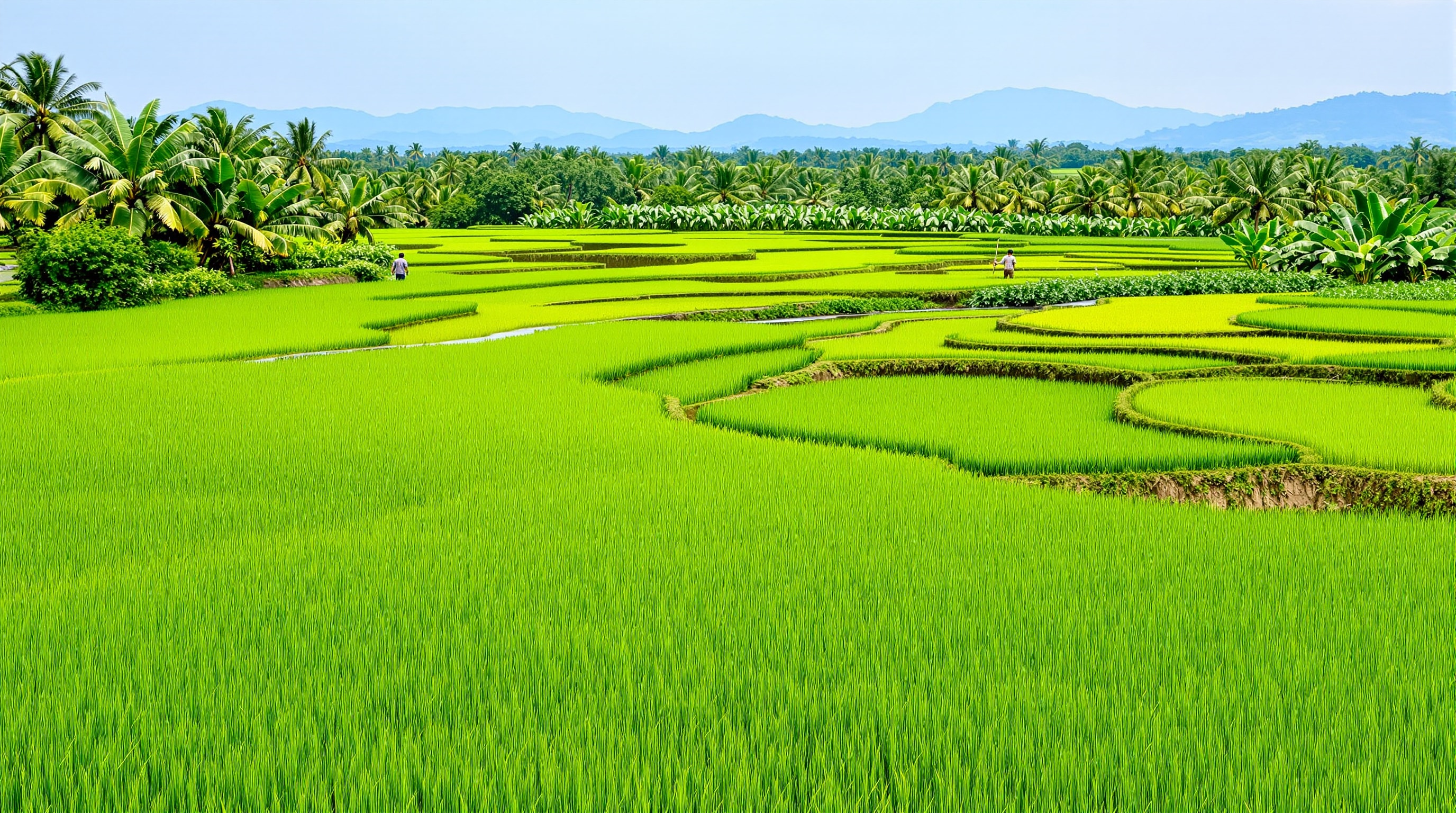
For most of its long history Eruvadi has lived by its fields. The paddy and banana that surround the town, watered by the Nambi river and the seasonal rains, have fed and employed its people for centuries. In the last few decades a second economy - built on the wages of workers in the Gulf - has grown up beside the first, and modern Eruvadi is best understood as the meeting point of these two.
Rice at the Heart of It
Paddy - rice in the field - is the foundation of agriculture across the Tamil south, and Eruvadi is no exception. The town's very name, by tradition, comes from the songs farmers sang while ploughing the paddy fields, a reminder of how deeply rice cultivation is woven into local identity. The rhythm of the rice year - ploughing, transplanting, the green of the growing crop, the gold of harvest - still sets the pace of rural life, and the harvest is celebrated in the great Tamil festival of Pongal, described on the community and culture page.
Banana and Mixed Farming
Alongside rice, banana is a signature crop of the Tirunelveli region and a common sight in the groves around Eruvadi, valued because it can yield well on the region's irrigated land. Farmers here have long practised a mixed agriculture - rice in the wet fields, banana and other crops on higher ground, with wells and channels supplementing the river - a diversified approach well suited to Tirunelveli district, which can be both fertile and dry depending on the rains. This dependence on water explains the region's centuries-old investment in tanks, channels and dams fed by the Ghats.
The Remittance Economy
From the 1970s onward, a second and very different source of livelihood transformed the town: the earnings of residents working in Dubai, Riyadh and the other cities of the Gulf. As explained on the Gulf connection page, remittances sent home by these workers have funded housing, education and community institutions on a scale the farming economy alone could not have supported. For many families, income now flows from both the field and the Gulf, and the two are often reinvested in one another - migrant earnings buying land, improving farms and educating the next generation.
Trades, Shops and Services
Around this agricultural and remittance base sits the ordinary commercial life of a small Tamil town: shops along the main road, markets, tailors and traders, transport, schools and the everyday services a community of eighteen thousand needs. Much of this local enterprise is itself sustained by remittance money circulating through the town, giving Eruvadi a level of commercial activity that reflects its global connections as much as its local produce.
A Town Between Two Worlds
The result is a distinctive kind of place - rooted in the soil of the far south yet plugged into the labour markets of the Gulf; a town where a farmer's year and an expatriate's contract are equally part of family life. That duality, more than any single crop or industry, is the real story of livelihood in Eruvadi. For the natural resource that underpins the farming half of it, see the Nambi river page; for the wider agricultural district, see the Nellai region.