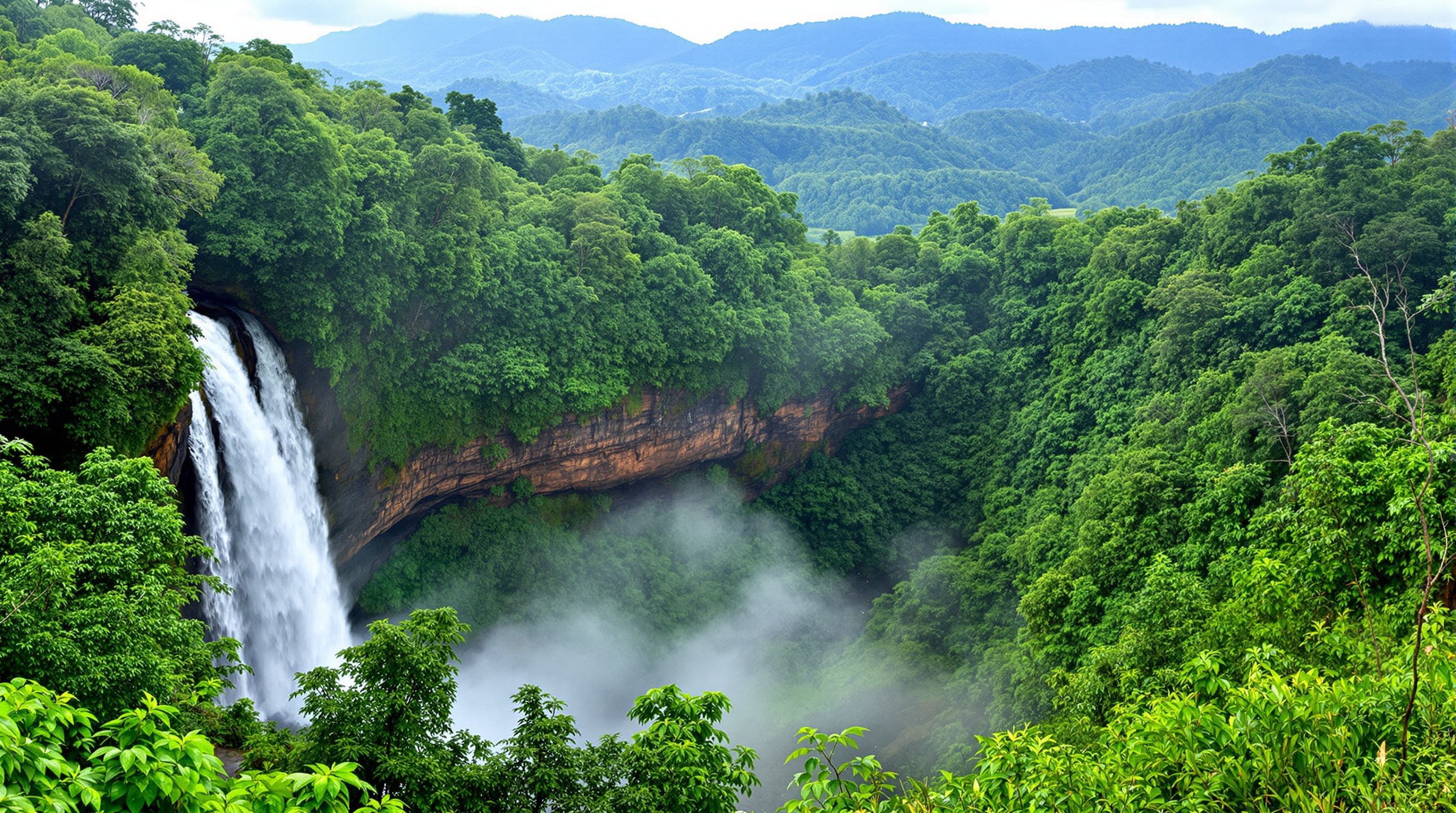
One of the pleasures of Eruvadi's location is what surrounds it. Sitting where the Tirunelveli plains meet the Western Ghats, the town is within easy reach of some of the finest scenery and most important protected wilderness in the whole of southern India, as well as ancient temple towns and dramatic waterfalls. This page is a guide to the landmarks that the old town's photographers loved to record - and that still draw visitors today.
Kalakkad-Mundanthurai Tiger Reserve
The greatest natural landmark of the district is the vast Kalakkad-Mundanthurai Tiger Reserve, which spreads across roughly 1,600 square kilometres of the South Western Ghats in Tirunelveli and Kanyakumari districts, about 45 kilometres west of Tirunelveli city. Declared a tiger reserve in 1988 by merging two earlier sanctuaries, it is the catchment for fourteen rivers and streams - including the Thamirabarani and Manimuthar - and shelters an extraordinary range of life, with hundreds of bird species and dozens of mammals such as the gaur, the Nilgiri langur and, of course, the tiger. Its Agasthyamalai hills are counted among India's great centres of biodiversity and endemism. The Tamil Nadu Forest Department manages access; the reserve's ecological importance is described in its encyclopaedic entry.
Papanasam - Falls, Dam and Pilgrimage
To the west, where the Thamirabarani river tumbles out of the Ghats, lies Papanasam, known both for its waterfalls and for the dam that harnesses the river for irrigation and power. The name - meaning roughly "destroyer of sins" - reflects its long standing as a place of Hindu pilgrimage, and the combination of forest, falling water and temple makes it one of the most popular day-trips in the district. It sits within the same mountainous zone as the tiger reserve.
Tirukkurungudi - An Ancient Temple Town
Closer to Eruvadi, at the foot of the hills, is Tirukkurungudi, one of the celebrated Vaishnavite temple towns of the Tamil country and home to the historic Nambi temple. For centuries it has been a place of pilgrimage, and its temple architecture and sacred hill make it a rewarding stop for anyone interested in the religious heritage of the far south. Its proximity is a reminder of how densely the landscape around Eruvadi is layered with history.
Manimuthar, Nambi Malai and the Hills
The hills themselves - including Nambi Malai, from which the town's river descends - form a backdrop to daily life in Eruvadi and a destination in their own right. The Manimuthar dam and falls, fed by the Ghats, are a further draw, offering reservoir views and forest walks. Together these places explain why the old community site kept whole photo galleries devoted to the country "around Eruvadi": the scenery is genuinely exceptional.
Toward the Coast and the Cape
Looking the other way, Eruvadi is also within reach of the coast and of Kanniyakumari - the very tip of the Indian peninsula, where three seas are said to meet - as well as the neighbouring towns of Nanguneri and, to the west, Tenkasi with its own famous falls. For visitors basing themselves in the area, the town makes a convenient and authentic launch point. Practical guidance on reaching the region is on the visiting and getting there page.
Protecting What Makes It Special
Much of what surrounds Eruvadi is protected wilderness or living religious heritage, and it deserves to be treated as such. Staying on marked routes in the reserves, respecting temple customs, and carrying out whatever you carry in are the simplest ways to keep these places as remarkable for the next visitor as they are today. To understand the river that ties this whole landscape together, see the Nambi river page.