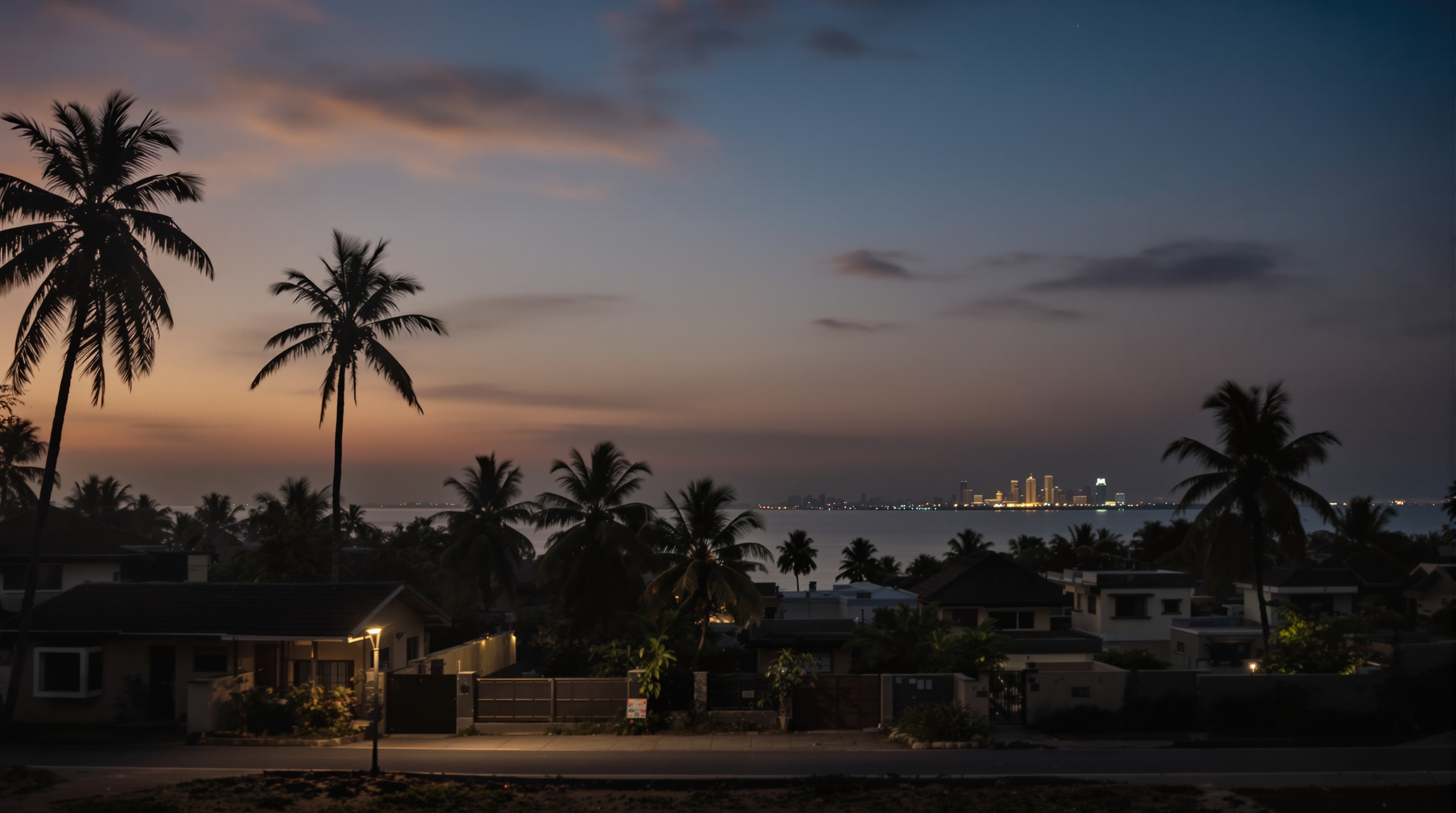
To understand modern Eruvadi you have to look well beyond Tamil Nadu - to Dubai, Riyadh, Sharjah, Doha and the other cities of the Gulf, where thousands of the town's people have lived and worked over the past half-century. For a settlement of around eighteen thousand, Eruvadi's international footprint is remarkable, and the story of that migration is now as much a part of the town's identity as the river or the paddy fields.
Why the Gulf
From the 1970s onward, the oil-driven construction boom in the Persian Gulf drew enormous numbers of workers from Kerala and Tamil Nadu, and the Muslim-majority towns of Tirunelveli district - Eruvadi prominent among them - sent a steady stream of migrants to fill jobs ranging from labour and trade to business, administration and the professions. Existing family and community ties meant that once a few residents had established themselves abroad, they helped others follow, and a self-reinforcing link between the town and the Gulf took hold.
Remittances and a Rebuilt Town
The most visible result is the town itself. Money sent home by Gulf workers - remittances - has funded new houses, supported extended families, paid school fees and underwritten community institutions. Across the Tirunelveli region, remittance income has reshaped local economies, and Eruvadi is a clear example: a town whose standard of building and whose civic amenities are notably ahead of what its farming base alone could support. This second, remittance-based economy runs alongside the older agricultural one described on the agriculture and livelihood page.
Hometown Associations Abroad
What sets Eruvadi apart from many migrant-sending towns is how organised its diaspora became. Rather than simply dispersing, its emigrants formed hometown associations in the cities where they settled - bodies that pooled resources for projects back in Eruvadi, supported members in difficulty abroad, and kept the connection to the town alive across generations. This instinct for association, mirrored at home by the town's many local welfare and educational bodies, is one of the community's defining traits, discussed further under community and culture.
A Tradition of Enterprise
The Gulf story is part of a broader regional tradition of trade and enterprise among the Muslim communities of the far south, whose merchant history along the Coromandel and Malabar coasts stretches back centuries. That heritage has produced notable entrepreneurs and philanthropists; the industrialist and educationist B. S. Abdur Rahman, whose business and charitable institutions became well known across Tamil Nadu, is one widely recognised figure with roots in the region's Muslim community. Stories of this kind - of enterprise abroad reinvested at home - are woven through the town's recent history.
Costs and Change
Migration has not been without cost. Long separations, families run largely by those who stay behind, and dependence on distant labour markets are real strains that towns like Eruvadi have lived with for decades, and the ups and downs of Gulf economies are felt directly here. Yet the overall effect has been to turn an out-of-the-way river town into a place with genuinely global horizons - one whose people are as familiar with a Gulf skyline as with the hills of the Western Ghats. For the landscape they return to, continue to the places around Eruvadi.